We look for treatment ideas that may still be worth discussing.
Personalized Treatment Options™
We review your health story and current medical research. Then we organize possible treatments, combinations, clinical trials, and newer ideas for you to discuss with your doctor.
Built around your historySources includedEasy to share with your doctor
100
Founding group limited to 100 people
We are offering this for free while we learn how much work each case takes and improve the service using real feedback.
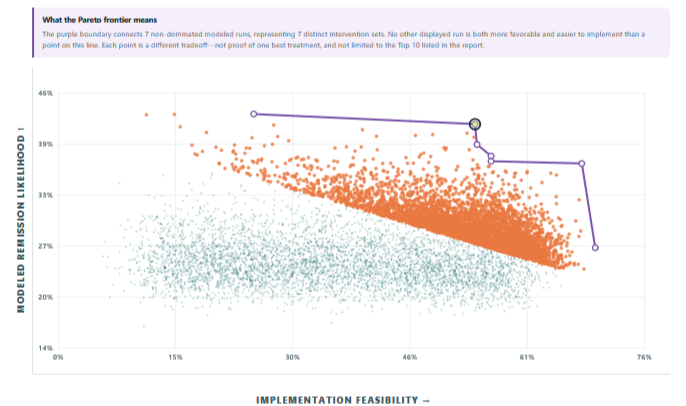
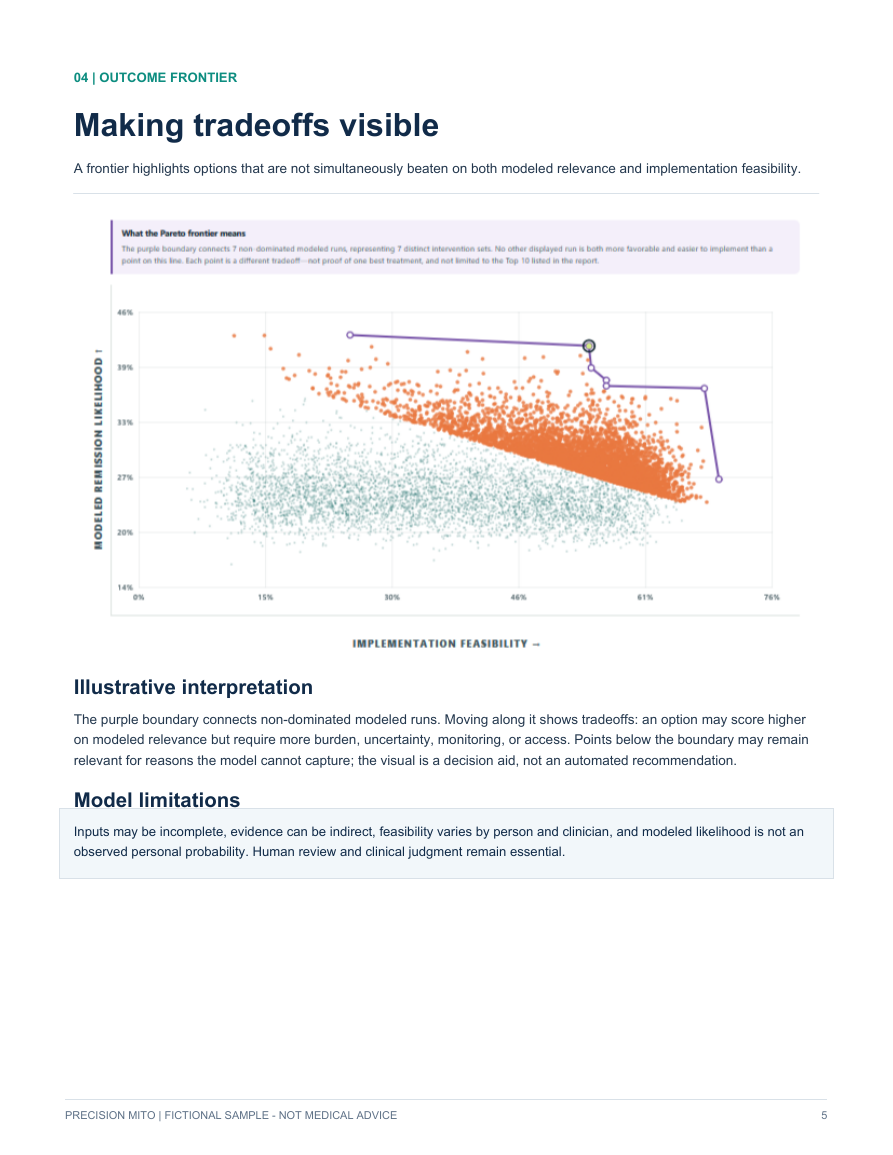
Example comparison chart
A simple way to compare the options.
This chart can help show which ideas may offer the best balance between possible benefit and how realistic they are to try. It gives you and your doctor a clearer place to start the conversation.
We only include this chart when your information is strong enough to make it useful.
Example only: the dots are possible ideas, and the purple line highlights the strongest tradeoffs.
Who this may help
This may help if you still do not have good answers.
You see several specialists
Your care is spread across different doctors who may each see only part of the picture.
Common treatments have not helped enough
You have tried the usual options but still need better answers.
Your condition is rare or complicated
Your symptoms and history do not fit neatly into one category.
You want a wider search
You want someone to carefully look for reasonable options that may have been missed.
How this is different
We search for more options, not just another opinion.
A second opinion usually reviews the choices already on the table. We look more widely for other choices that may be worth asking about.
A SECOND OPINION OFTEN ASKSWould another doctor see my case differently?OUR REVIEW ASKSAre there other reasonable options my care team and I should discuss?
What we do
We use your full health story to guide the search.
1. Organize your story
Use Mito Map to collect your diagnoses, symptoms, lab results, medicines, past treatments, and goals.
2. Search widely
We look through medical research, treatment guidelines, drug combinations, supplements, clinical trials, and newer ideas.
3. Check each idea
We ask: Does it fit your case? How strong is the research? What are the risks and unknowns?
4. Make it useful
We put the best ideas, important warnings, questions, and sources into reports you can use and share.
More than a list
We explain why each idea may or may not make sense.
You will not get a random list of treatments. Each idea comes with a simple explanation of why it came up, what supports it, and what to ask your doctor.
Why it came upHow the idea connects to your symptoms, diagnosis, test results, or past treatment response.
What supports itThe useful studies, guidelines, trials, and source links we found.
What we do not knowWhere the research is weak, mixed, early, or not a close match for your case.
What could make it unsafePossible drug interactions, reasons to avoid it, and things your doctor may need to monitor.
What to ask your doctorClear questions to help you have a more useful appointment.
What you get
Clear reports for you and your doctor.
If we accept your case, you get the full package for free during the founding group. We plan to charge $2,500 for the same service later. Every package includes an easy-to-read report, a shorter doctor summary, a review of the strongest ideas, safety notes, and links to the research. We also check for useful clinical trials. Some cases may include an extra chart that compares the tradeoffs between options, but only when there is enough information to make that chart useful.
Your main report
A simple summary of your case, the ideas we found, which ones stand out, and what to ask next.
Written for youA short doctor summary
The key facts, reasons, warnings, and questions your doctor can review quickly.
Easy to shareA side-by-side comparison
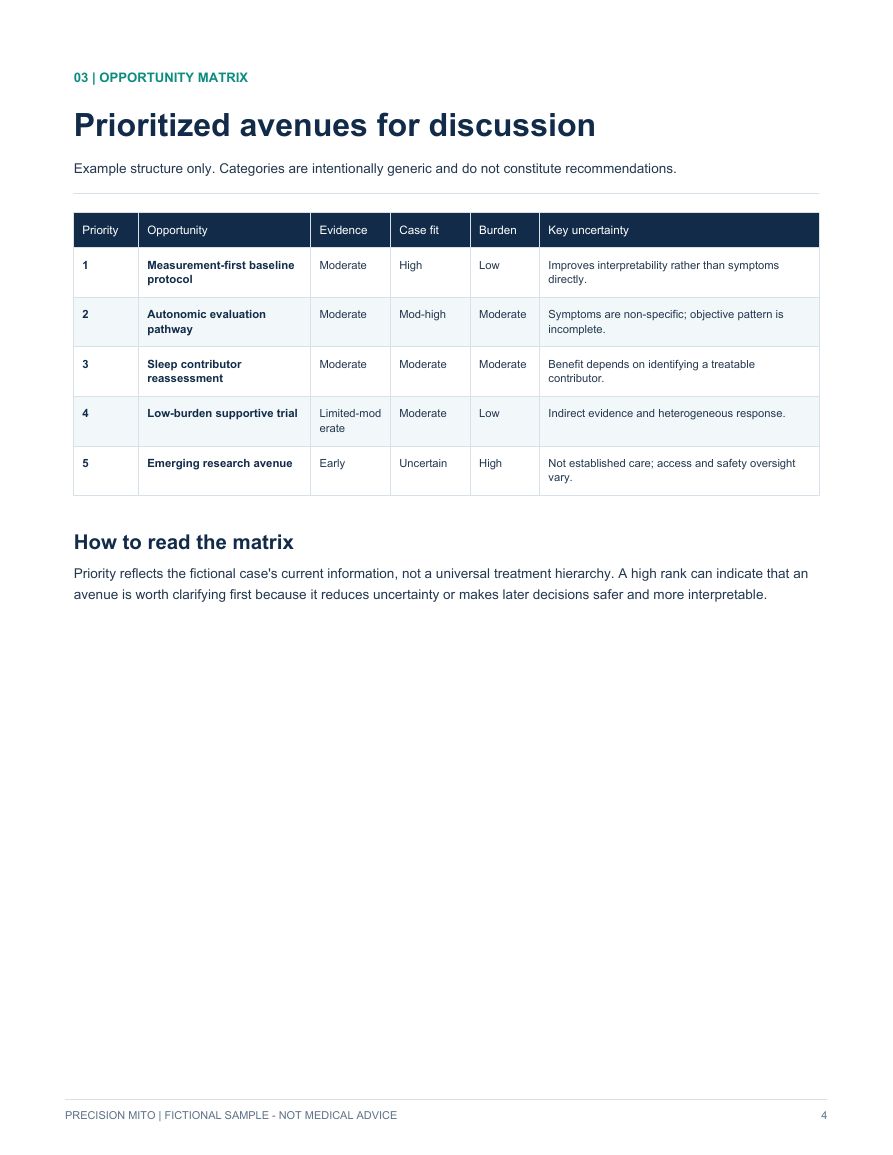
A clear table showing which ideas have stronger research, may fit better, or may be harder to try.
See the differencesA page for each main idea
Why it came up, what supports it, what could go wrong, and what questions still need answers.
Clear explanationsAn option tradeoff chart
When the information allows it, a chart showing which options may offer the best balance of promise and practicality.
When usefulClinical trials and new research
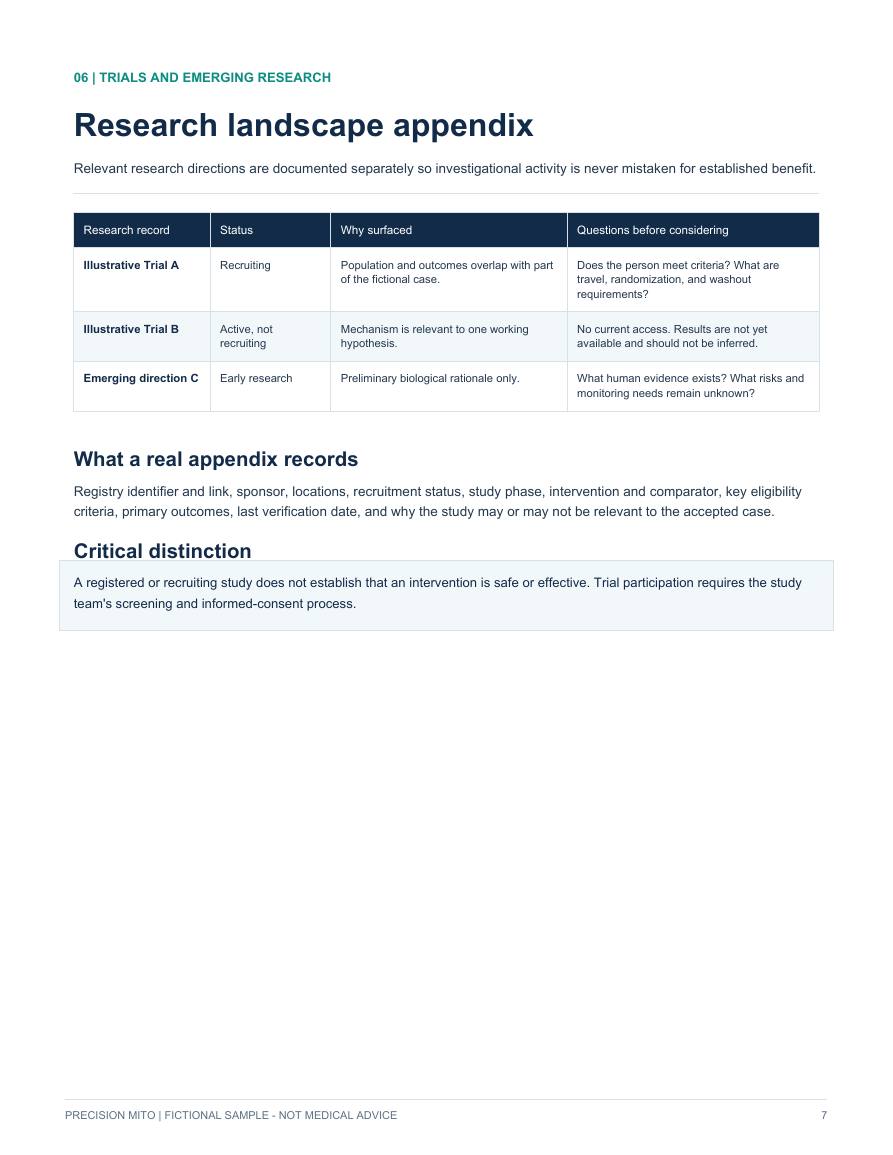
Trials and early ideas that may be relevant, plus a clear warning when the research is still too early.
What is being studiedSafety and unknowns
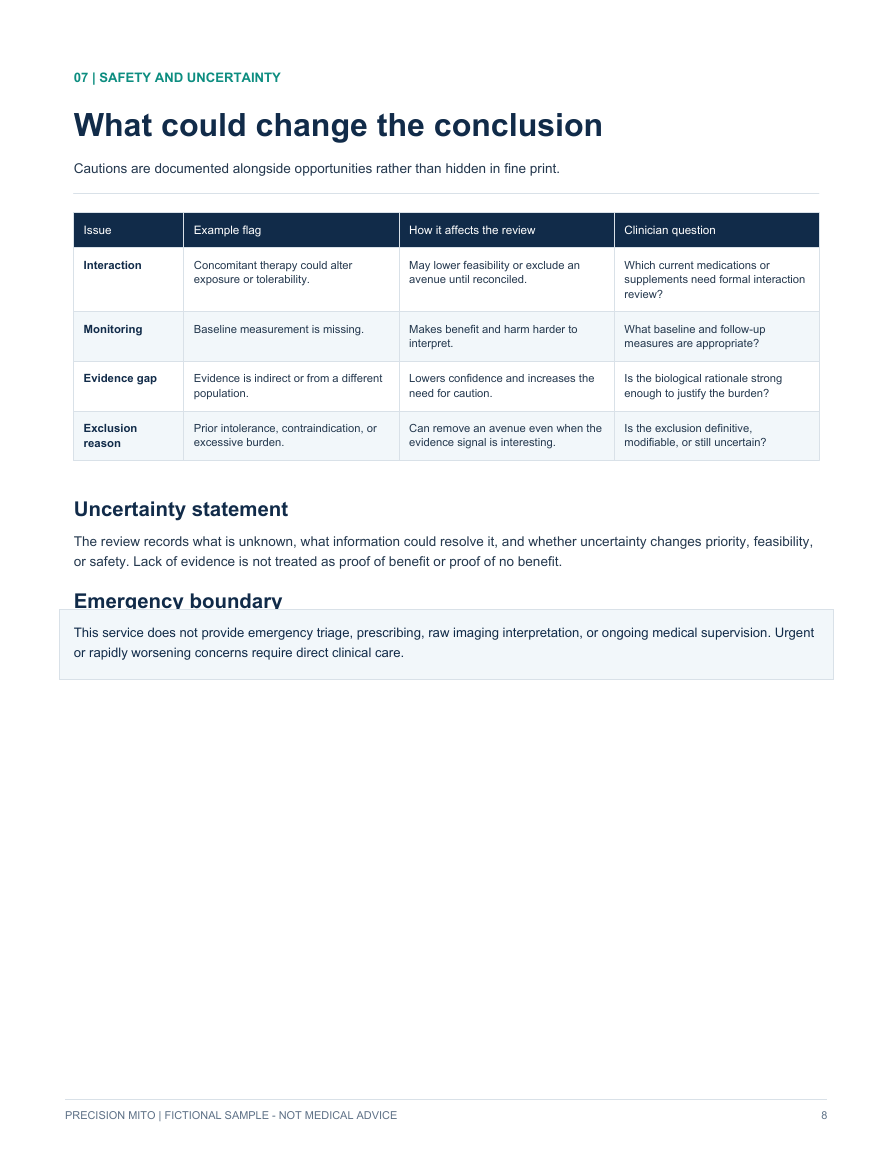
Possible interactions, reasons an option may not fit, what needs monitoring, and what we still do not know.
Important warningsLinks to the research
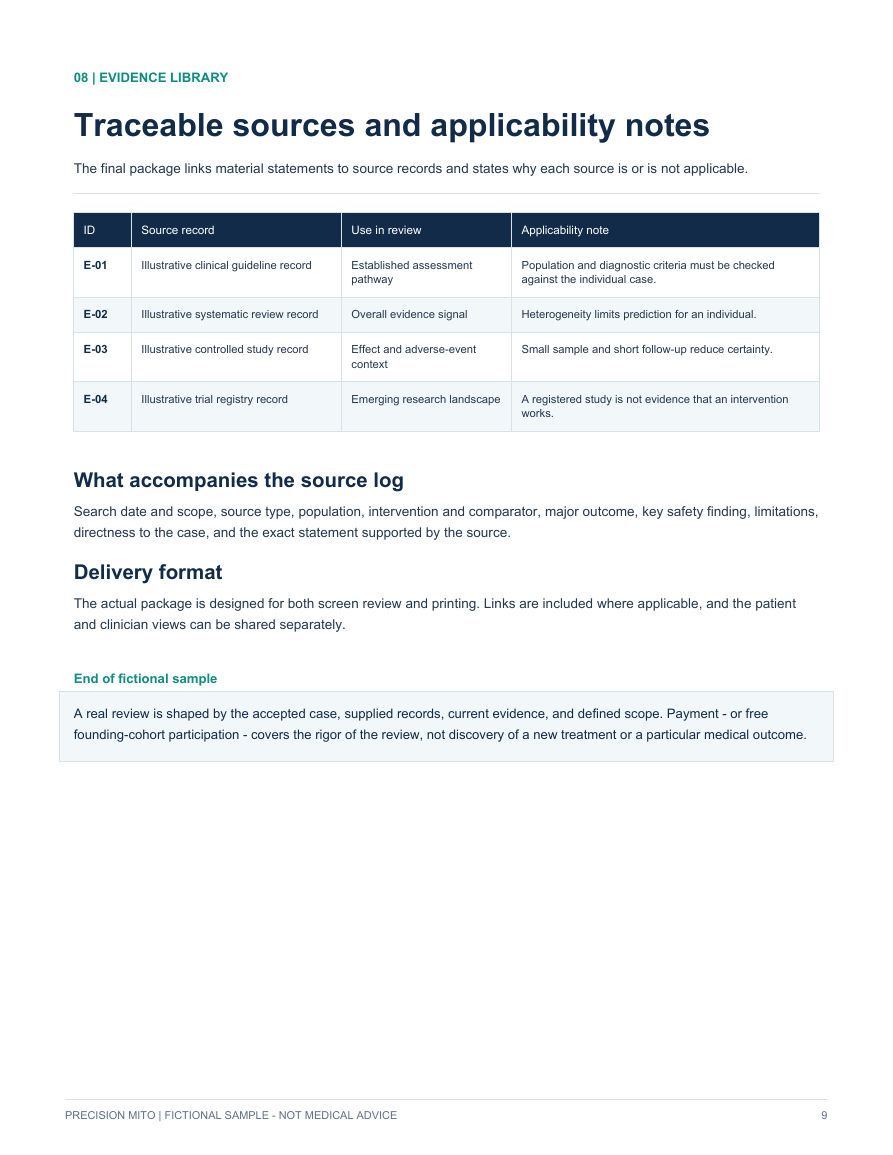
The studies and trusted sources behind the report, with notes about how well each one matches your case.
Check our work
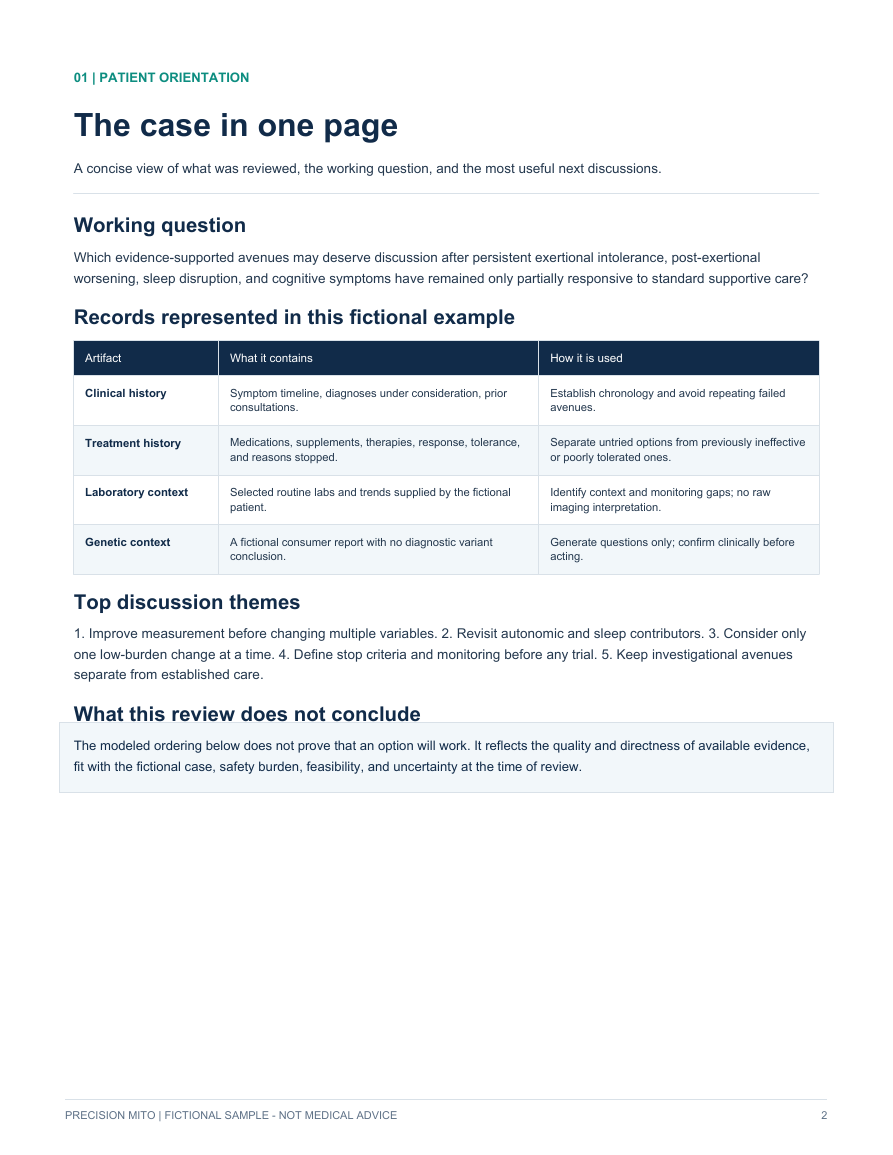
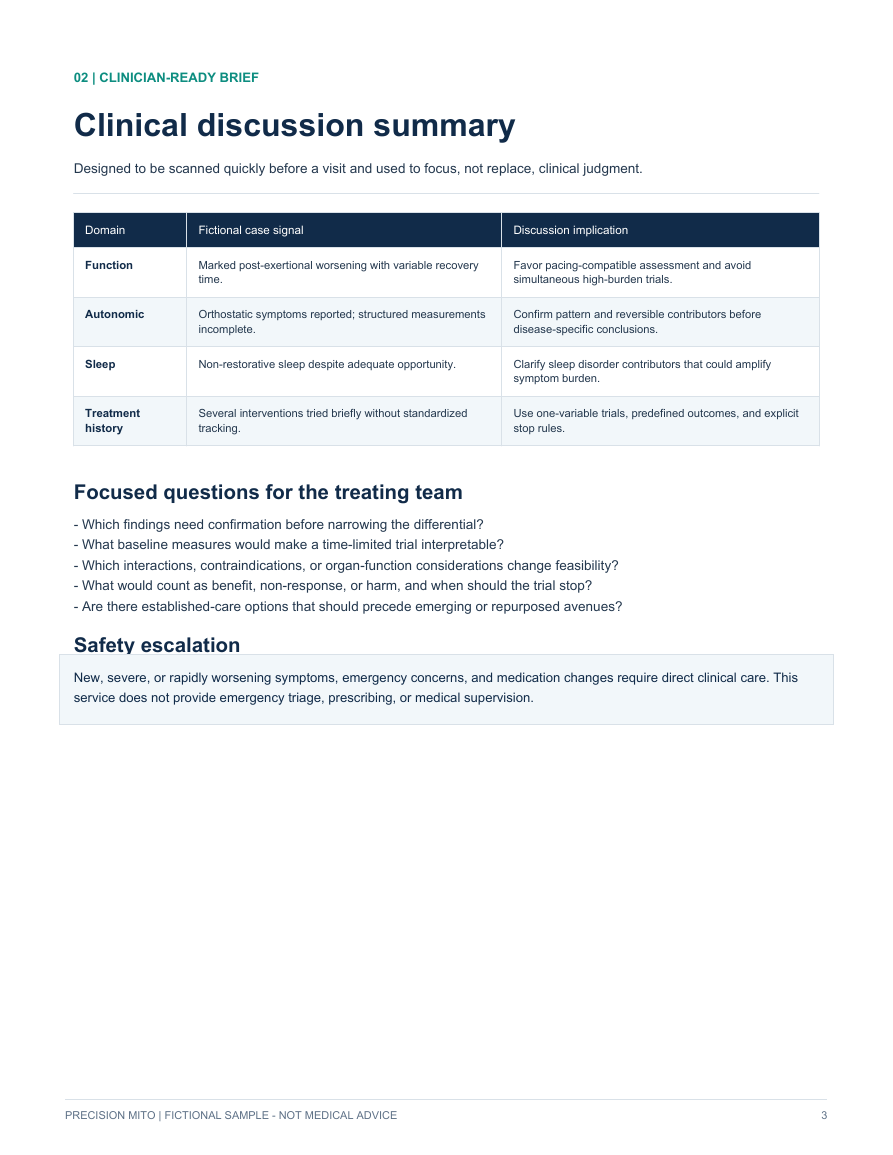
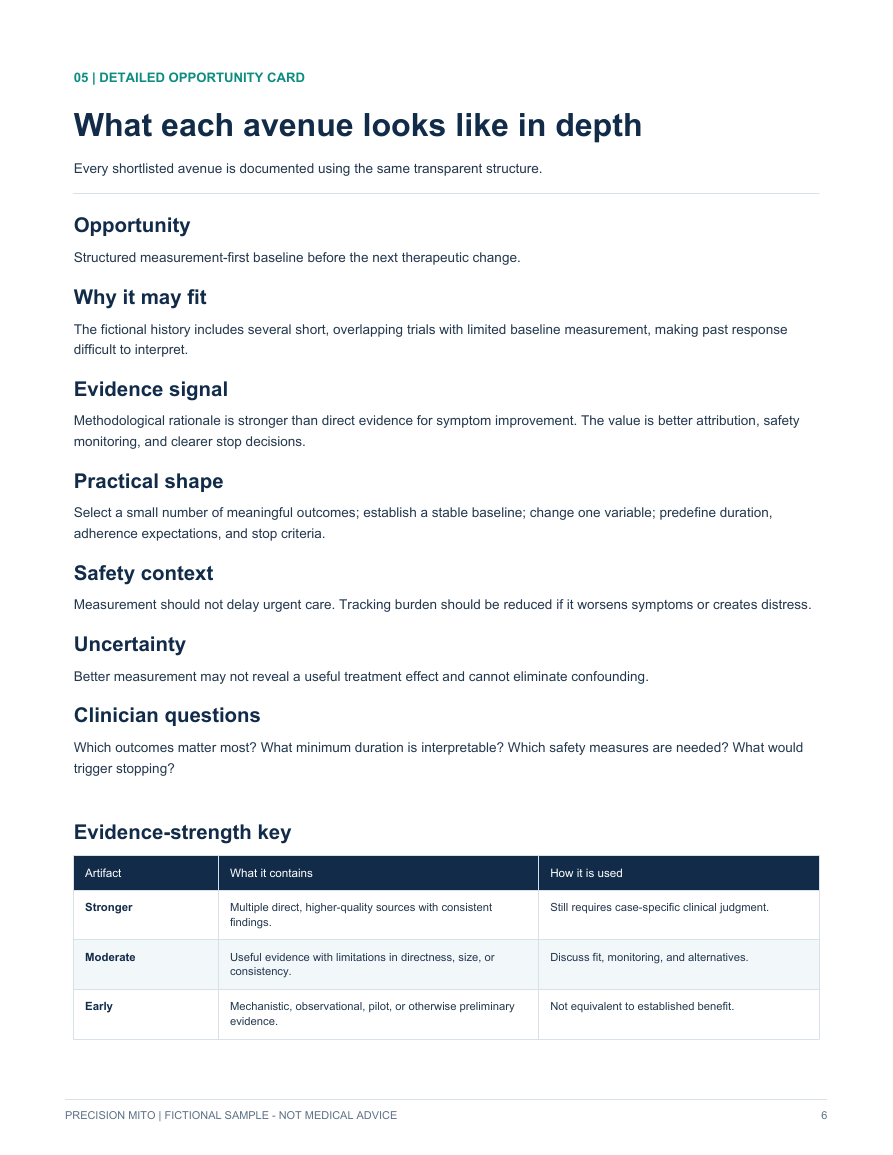
See what the finished package looks like. Open a nine-page sample made with a fictional case. It shows the kind of reports, tables, notes, and sources you may receive.
Your main reportYour story, the main ideas we found, and questions to ask next.
Short doctor summaryThe most important facts, warnings, and questions in a quick format.
Side-by-side comparisonSee which ideas look stronger, fit better, or may be harder to try.
Page for each main ideaWhy it came up, what supports it, concerns, and doctor questions.
Option tradeoff chartA picture showing the balance between possible promise and practicality.
Clinical trials and new researchWhat is being studied, who may qualify, and what is still unknown.
Safety and unknownsPossible interactions, things to monitor, and reasons an idea may not fit.
Links to the researchSee the sources behind the report and how well each one matches.
Select any picture to open it at full size. These examples use a made-up case. They are not medical advice, and your report will be different.
What happens next
Here is what happens after you apply.
1
Send a short application
Tell us who the review is for and what you hope to learn.
2
Continue to Mito Map
Create an account or sign in so you can safely organize your health information.
3
Add what you know
Start with symptoms, diagnoses, past treatments, and goals. We ask for full record files only after acceptance.
4
We decide if we can help
We review the size and needs of the case. If accepted, we begin the full search.
5
Get your reports
Receive the report for you, the doctor summary, the main ideas, safety notes, and research links.
Free application
Start with a short application.
This helps us learn whether the service may be a good fit. After you submit it, you will continue to Mito Map to organize your health story. Do not put medical records, Social Security numbers, account numbers, or other private identifiers in this form.
There may still be useful questions to ask.
If the usual options have not been enough, a wider search may help.
The service is free for people accepted into the founding group. We cannot promise that we will find a new treatment or that any idea will improve your health.
Personalized Treatment Options™ gives you research and questions to discuss with your doctors. It is not medical care. We do not diagnose, prescribe, handle emergencies, read raw medical images, replace your doctors, or promise results.